

MARYLAND WILDLIFE SOLUTIONS
Professional Skink Removal
A lizard in the basement, the garage or the sunroom? Maryland Wildlife Solutions removes skinks gently, finds the gaps they use, and seals them out for good.
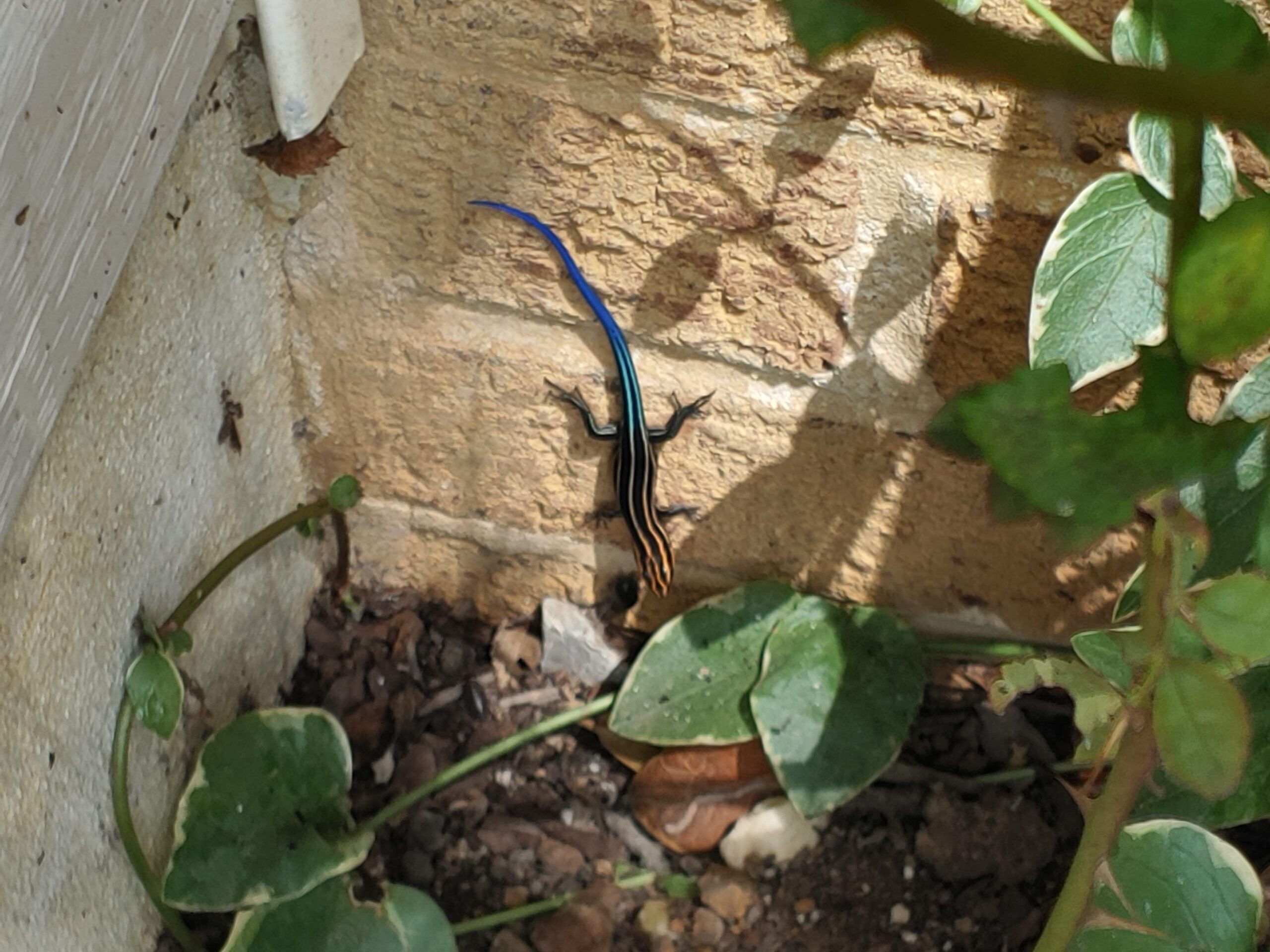
Skinks are small, quick, shiny lizards, and they are completely harmless. They are also good at finding the same small gaps that let insects, mice and snakes into a house. When skinks keep showing up inside, that's a good indication that your home is open to wildlife and pests. We remove them and fix the openings they're using.
Homeowners and businesses call us about:
- A lizard running loose in the house
- Skinks in basements, laundry rooms and utility rooms
- Skinks in garages, sheds and screened porches
- Blue-tailed lizards that look dangerous
- Skinks under decks, porches and steps
- Skinks living in woodpiles and rock walls next to the house
- Kids or pets catching lizards and bringing them inside
- Insects that keep drawing skinks to the house
Keep reading to learn which skinks live in Maryland, why they come inside, and exactly how we keep them out. Or call 410-994-8881 to book an inspection.
Skinks and Lizards of Maryland
Seven species of lizards have been reported in Maryland : six natives and one introduced gecko. Four are skinks. These two are the ones homeowners meet.
| Species | Size and Look | When Active | Where in Maryland | Typically Seen |
|---|---|---|---|---|
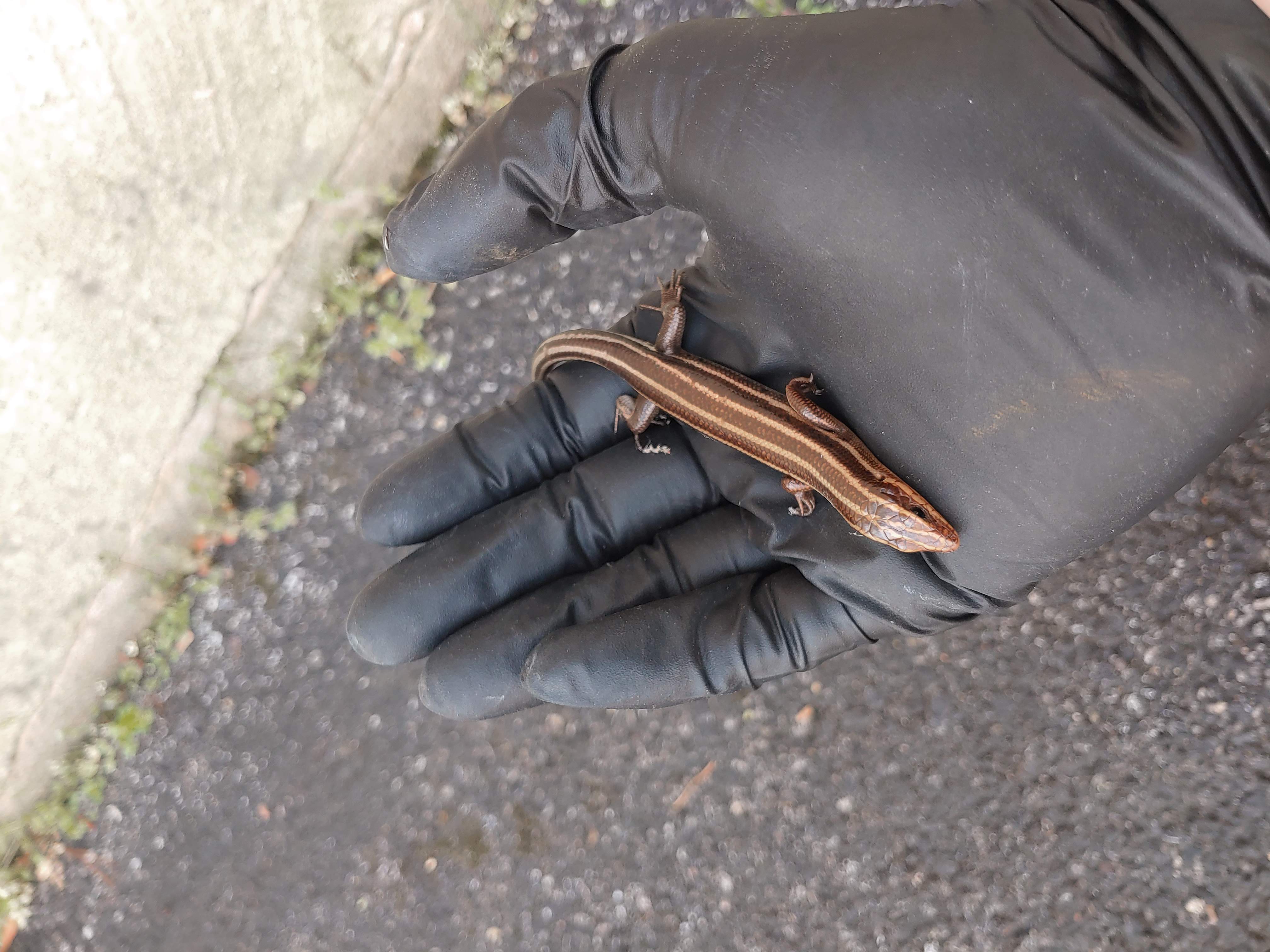
| Common five-lined skink | 5 to 8½ inches with the tail. Young are black with five light stripes and a bright blue tail. Adult males turn brown or olive with an orange-red head in spring. | Daytime, spring to fall | All 23 counties and Baltimore City, most common on the Coastal Plain | Basements, garages, porches and woodpiles. Our most common skink. |
| Broad-headed skink | Maryland's largest skink, 6 to 13 inches. Males have a wide orange head. Young look like young five-lined skinks. | Daytime, spring to fall. Climbs high in trees. | Mostly the Coastal Plain and Potomac River valley | Decks, porches and tree-shaded yards. Large males sometimes alarm people. |
Maryland's other lizards rarely cause problems in homes. They are the six-lined racerunner, the little brown skink (ground skink), the eastern fence lizard, the introduced Mediterranean gecko, and the coal skink, which is state endangered .
Learn more about native reptiles: Maryland DNR, Lizards of Maryland and Maryland Biodiversity Project .
ID tip: Young five-lined and broad-headed skinks look almost the same, and even experts check face scales to tell them apart. For a homeowner, the answer doesn't change: both are harmless. If the animal has no legs, it's a snake, not a skink. See our snake removal page. If it's slow, moist-skinned and lives under logs, it's likely a salamander.
Skink Biology and Behavior
Meet the Common Five-Lined Skink
The common five-lined skink is the most familiar skink in Maryland , found statewide in suitable habitat. Here's what our experts can tell you about it.
- Scientific name: Plestiodon fasciatus
- Size: 5 to 8½ inches long , including the tail.
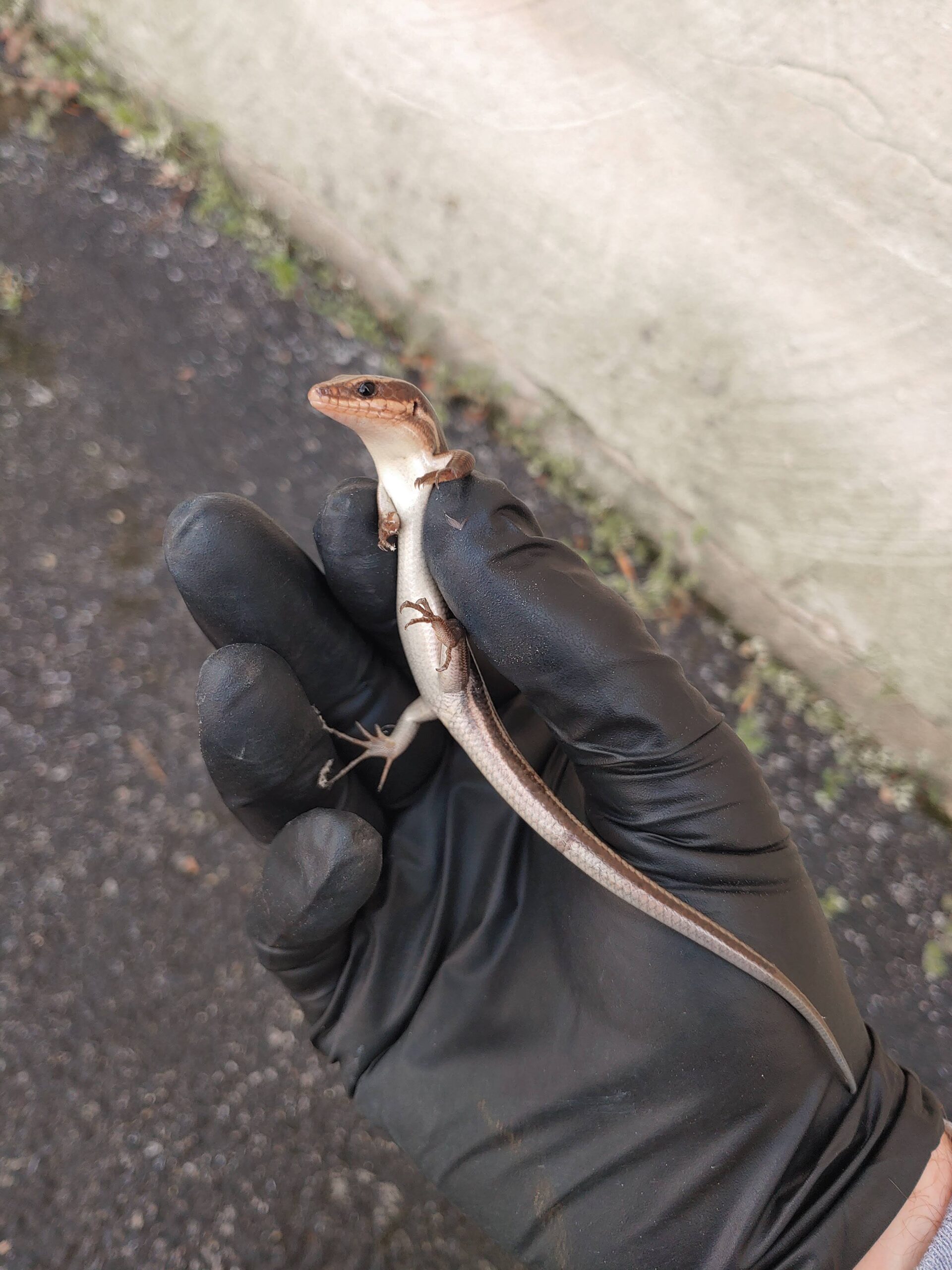
- Look: Smooth, shiny scales. Young skinks are black with five white or yellowish stripes and a bright blue tail. Adults fade to brown or olive, and breeding males develop orange-red color on the head and jaws.
- Lifespan: Up to about 6 years.
- Daily schedule: Active by day. Like all reptiles, skinks are cold-blooded and bask in the sun to warm up before hunting.
- Diet: Mostly insects, spiders and other small invertebrates , plus earthworms and snails.
- Defense: A skink grabbed by the tail can drop it. The loose tail wriggles to distract the predator while the skink escapes. A new, shorter tail eventually grows back.
Where Skinks Live and Why Your House Attracts Them
Five-lined skinks favor humid woodland with rocks, logs, stumps, rotting wood and sawdust piles . Around homes, woodpiles, rock walls, landscape timbers, decks and old outbuildings offer the same cover.
Our technicians find that how often you see skinks depends on where you live in Maryland. In Southern Maryland, skinks are commonly seen around houses and frequently get into homes and garages.
Skinks come inside by accident more than by plan. They follow insects, look for shelter from heat or cold, and slip through gaps under doors, garage door seals, foundation cracks, window wells and vents. A house with insect problems and open gaps at ground level sees the most skinks.
The Skink Year in Maryland
| Months (Approximate) | What Skinks Are Doing | What You May Notice |
|---|---|---|
| Mid-October to Mid-March | Hibernating alone or in small groups in rotting logs, under large rocks, or underground below the frost line. | Usually nothing. A skink may occasionally turn up in a warm basement. |
| Late March to May | Skinks emerge and bask. Courtship and mating occur in April and May. Males show orange heads and defend territories. | Lizards sunning on steps, walls, decks and woodpiles. |
| June to July | Females lay 4 to 20 eggs, usually 9 to 12, in a hidden nest and guard them for about a month. | Fewer adults in the open. A female may stay under a board or log. |
| August to September | Eggs hatch. Young skinks are on their own within a day or two. | Small skinks with bright blue tails, sometimes indoors. |
| October | Skinks look for winter shelter. | Skinks around foundations and woodpiles on warm days. |
The Good Side of Skinks
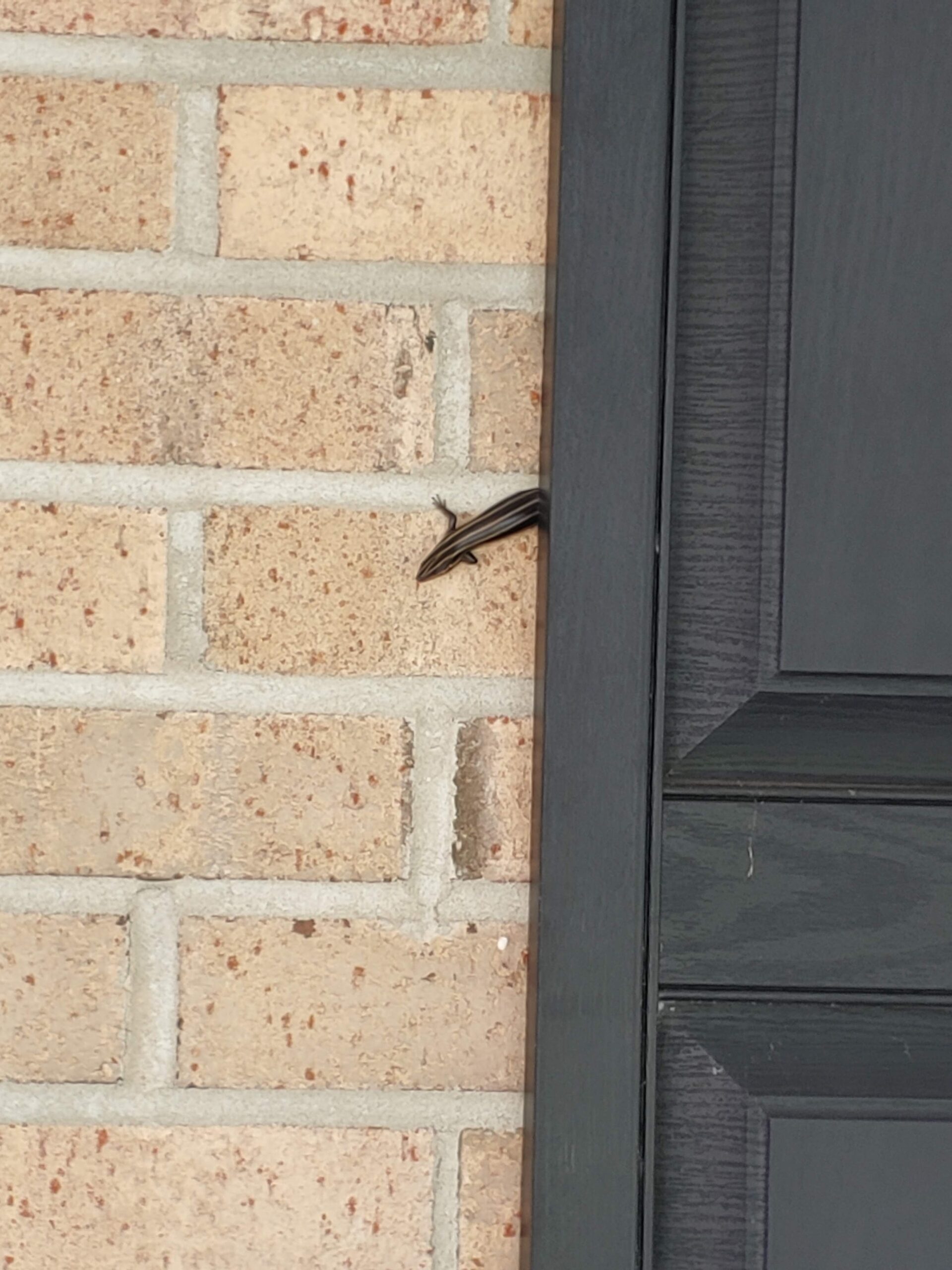
Skinks are welcome garden guests. We just want to keep them on the right side of the door.
- They eat bugs. Skinks hunt crickets, flies, grasshoppers, grubs, beetles, ants and spiders , many of them pests in gardens and around homes.
- They are part of the food web. Birds, mammals and snakes all eat skinks, and some snakes specialize in them .
- They are a sign of a healthy yard. Skinks need cover, insects and places to bask. Where they thrive, the backyard ecosystem is working.
The goal is balance: skinks belong in the woodpile and the garden, not in the laundry room.
Signs You Have Skinks
Skinks are easy to spot when they're out, and quick to vanish. Call us if you notice:
- A small, shiny lizard in the basement, garage, sunroom or laundry room
- Lizards with bright blue tails, especially in late summer
- Lizards basking on your foundation, steps, deck or patio
- Skinks darting into woodpiles, rock walls or gaps under siding
- A dropped tail, still wriggling or lying on the floor
- Pets or kids repeatedly catching lizards near the same spot
- Gaps under exterior doors or worn garage door seals
- Lots of crickets, spiders or other insects indoors
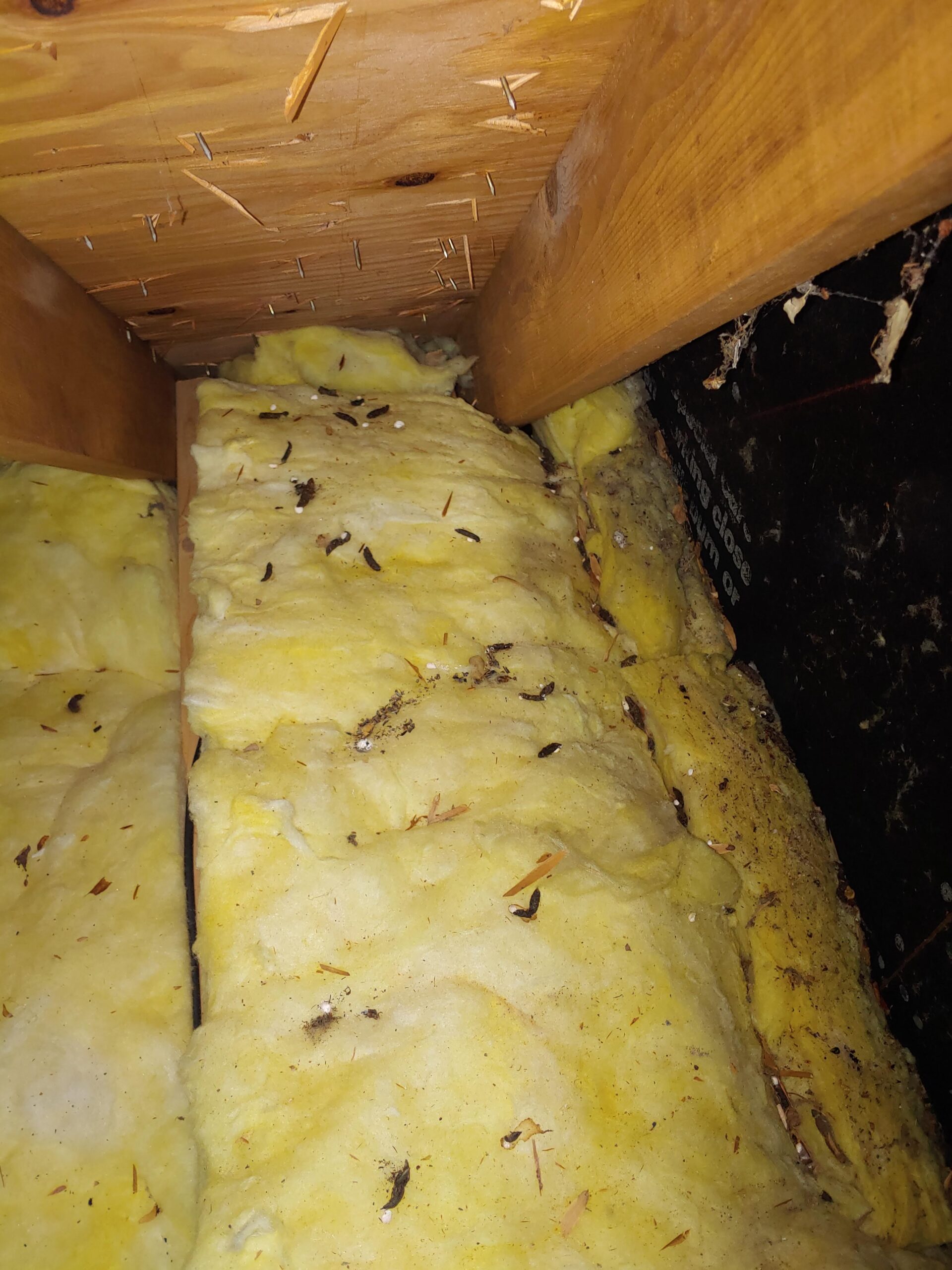
- Dark, cylindrical droppings with a white cap at one end
Common Skink Problems, and How We Fix Each One
Skinks don't chew, dig or damage homes, so skink problems are mostly about where they turn up. Here is what each one means and how our team handles it.
A Skink Loose in the House
A lizard racing across the kitchen floor is startling, and skinks are fast enough to vanish under appliances and furniture. Grabbing one by the tail usually leaves you holding a wriggling tail while the skink escapes.
How we fix it: Close off the room and open an exterior door if one is nearby. Skinks often head for daylight. If it hides, call 410-994-8881 and we'll find and remove it by hand, without harming it. Then we look for how it got in.
Skinks in Basements, Garages and Attics
Repeated skink sightings mean there are gaps and cracks in your home. The same gaps often let in insects, mice and small snakes, so they're worth finding.
How we fix it: We find and seal the openings: worn door sweeps, garage door seals, foundation cracks, gaps around pipes and wires, window wells and vents. We use durable materials such as metal mesh and long-lasting sealants.
Learn more about our wildlife proofing and exclusion services .
Skinks Under Decks, Porches and Steps
Decks, porches and steps next to the house give skinks cover and basking spots right by your doors. That's a common starting point for indoor visits.
How we fix it: We seal the gaps between these structures and the house. Where a deck or porch also shelters snakes or digging animals, a buried barrier may help address several problems.
See our wildlife exclusion and prevention services .
Woodpiles and Rock Walls Against the Foundation
Firewood stacked against the house, rock walls and landscape timbers make ideal skink habitat a few inches from your foundation gaps.
How we fix it: We point out which cover to move or thin. Firewood belongs off the ground and away from the house. Skinks can stay in the yard, just not against the house.
Insects That Draw Skinks Inside
Skinks follow food. A basement or garage with crickets, spiders or other insects keeps inviting them in.
How we fix it: We seal the entry points insects and skinks share, and reduce insect activity through our pest control plans. Fewer bugs means fewer reasons for skinks to visit.
Learn more about our pest management services .
Fear of Poisonous Blue-Tailed Lizards
Many people believe blue-tailed skinks are venomous. But these skinks are harmless. A large adult may bite if handled, but the bite is usually more startling than painful.
How we fix it: We educate our clients about skinks, including their benefits and harmless nature. We also understand that not everyone wants them around. We identify solutions such as sealing gaps and modifying habitat near the house.
Seeing skinks in the house again and again? A professional inspection can help find the gaps they're using. Book a Skink Inspection or call 410-994-8881.
Why Every Skink Job Starts With an Inspection
A skink in the house is a symptom. The real question is how it got in and what else is using the same path.
An inspection answers both. It also confirms what you're dealing with, since a quick glimpse of a dark, striped animal can be a skink, a salamander or a small snake.
During a skink inspection, our technicians:
- Identify the species from the animal itself, evidence left behind, or your photos.
- Walk the foundation, checking door sweeps, garage door seals, foundation cracks, utility penetrations, window wells and vents.
- Check basements, garages, crawl spaces and sunrooms for other entry points.
- Check the attic space for activity and the roofline for entry points.
- Look for insects, mice or snakes using the same gaps.
- Note outdoor cover against the house, such as woodpiles, rock walls, decks and dense plantings.
- Photograph findings and provide a written plan with clear pricing for exclusion and any pest work.
Learn more about our wildlife inspections and home exclusion .
A wildlife inspection is $149, and the fee is credited toward your job if you move forward.
Skink Control Methods: What Works and What Doesn't
Professional wildlife control uses several methods. Here is how each one applies to skinks in Maryland.
1. Habitat Modification
Changing the property so it's less attractive to skinks. Verdict: helpful and easy.
- Move firewood, lumber and debris away from the house, and store firewood off the ground.
- Keep a 1–2 foot perimeter around your home free of dense vegetation and clutter.
- Avoid dense groundcover against the foundation.
- Change outdoor lighting near doors to warm yellow LED bulbs to reduce insect activity.
- Keep garage doors closed when you're not using them.
Our role: We point out the cover and insect sources that matter most at your home.
2. Exclusion
Verdict: the most lasting fix for skinks indoors.
- We replace worn door sweeps.
- We seal foundation cracks and gaps around pipes, wires and vents.
- We install pest-proof vent covers.
- We seal gaps where decks, porches and steps meet the house.
- We conduct roofline seal-ups where needed.
Why professional work matters: Maryland regulations protect reptile refuges, including certain dens, nests and basking sites. Work affecting occupied habitat must comply with applicable Maryland DNR requirements. Our team evaluates the site and determines appropriate exclusion methods.
The same exclusion work can help keep out insects, mice and snakes. Learn more about our whole-home wildlife exclusion .
3. Repellents and Deterrents
Verdict: no reliably proven skink repellents. Commercial reptile repellents and ultrasonic devices are not dependable substitutes for sealing entry points and removing attractants. Avoid applying chemicals to skinks.
4. Trapping and Removal
Verdict: careful hand removal for skinks indoors.
- We capture skinks indoors using humane handling methods and release them where permitted.
- Maryland protects native reptiles. State rules restrict certain trapping and taking methods and protect reptile habitat.
- Common five-lined, broad-headed and little brown skinks are among Maryland's regulated native reptiles . The coal skink is state endangered.
- Glue traps are not recommended. They can injure small lizards and capture unintended wildlife.
5. Chemical Control
Verdict: do not use chemicals to kill skinks. Wildlife control should focus on removal and exclusion, not poisoning reptiles. When appropriate, professional pest control can help reduce the insects that attract skinks around the house.
The Bottom Line
Seal the gaps, reduce insects, and move cover away from the foundation. Skinks can stay in the yard, where they do good work.
DIY Skink Prevention: What You Can Do Today
Many skink problems can be reduced with a few simple fixes. Start here:
Around the House
- Check the bottom of every exterior door. If you can see daylight, replace the door sweep.
- Replace worn or torn garage door seals.
- Seal small cracks in the foundation and gaps around pipes and wires.
- Cover window wells and keep screens on foundation vents.
- Keep garage and basement doors closed.
Yard and Garden
- Stack firewood off the ground and away from the house.
- Keep a 1–2 foot perimeter around your home free of dense vegetation and clutter.
- Clear boards, debris, leaves and clutter from beside the house.
- Swap bright white porch lights for warm or yellow bulbs, or turn them off when not needed, to attract fewer insects.
- Keep cats indoors when possible. Cats catch many skinks and may bring them inside.
What Not to Do
- Don't grab a skink by the tail. It may drop the tail and escape.
- Don't kill skinks. They're harmless, useful native reptiles subject to Maryland wildlife protections.
- Don't use mothballs, sprays or glue traps.
- Don't disturb a female guarding eggs in early summer.
- Don't dig out, block or destroy occupied reptile shelters without checking applicable regulations. Call a qualified wildlife professional first.
Frequently Asked Questions About Skinks
Are blue-tailed skinks poisonous?
No. Skinks have no venom and aren't poisonous.
Do skinks bite?
A large skink may bite if you pick it up. The bite is usually more startling than painful. Leave them alone and they generally won't bite.
Why is there a lizard in my house?
Usually it followed insects inside or was looking for shelter, slipping through a gap under a door, a worn garage door seal or a foundation crack. Repeat visits suggest an open entry point.
What kinds of lizards live in Maryland?
Seven lizard species have been reported in Maryland. Homeowners commonly encounter five-lined skinks, broad-headed skinks and little brown skinks.
Why do some skinks have blue tails?
Young five-lined and broad-headed skinks have bright blue tails. Researchers believe the color can draw predators toward the detachable tail rather than the body.
Will a skink's tail grow back?
Yes. The replacement tail is usually shorter and duller than the original.
Can I kill or trap skinks?
Maryland regulates the taking of native reptiles, including skinks. Some trapping and lethal methods are prohibited. If a skink gets inside, guide it outside safely or contact a professional.
Are skinks dangerous to pets?
Skinks aren't venomous. The bigger concern is pets catching or eating them. Reptiles can carry Salmonella, so discourage pets from handling them.
What do you do with the skinks you remove?
We use humane capture and release methods, following applicable Maryland wildlife regulations.
Do you guarantee your work?
Our exclusion services include warranty options. General exclusion work typically carries a one-year warranty, while full-home exclusion packages may offer broader renewable coverage. Specific terms are provided in your written agreement.
Keep Skinks in the Garden, Not the House
Maryland Wildlife Solutions is a licensed and insured wildlife control company based in Gambrills. Our owner is an NWCOA Certified Master Instructor and the 2020 NWCOA Educator of the Year, and he trains wildlife professionals across the country.
He serves on the NWCOA Training Committee and is a past Director at Large on the NWCOA Board of Directors. We're licensed in Maryland, Virginia and Washington DC, and we're a certified Maryland Small Business Enterprise (SBE). Our team holds NWCOA Herptile Management Standards and Venomous Snake Handling certifications.
We remove skinks gently and seal the small gaps that let them, and the insects they hunt, into your home.
Call: 410-994-8881 | Email: info@mdwild.com
Serving homes and businesses across Maryland, Washington DC and Virginia. See our full service area.
Need Help With Skinks in Your Home?
Contact Maryland Wildlife Solutions to schedule a wildlife inspection and discuss humane removal and exclusion.
Book a Skink Inspection