

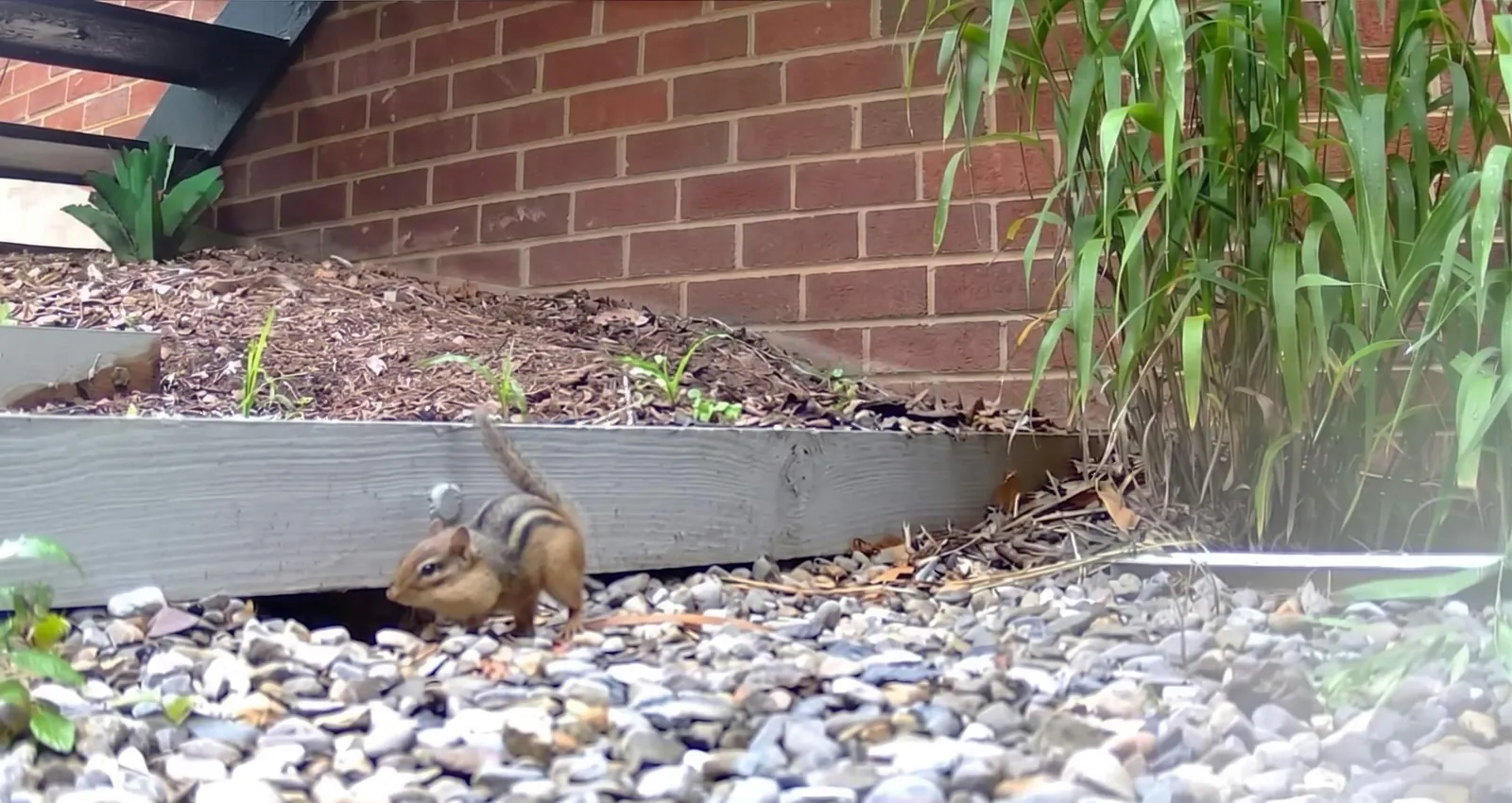
Chipmunk Removal and Control in Maryland
Small holes along the foundation, the patio or the retaining wall? Maryland Wildlife Solutions removes chipmunks, finds where they’re getting in, and protects your home and garden from the next ones.
One chipmunk is cute. A yard full of them is a different story. Each one digs a tunnel up to 30 feet long, and they love to dig right beside foundations, patios, steps and retaining walls, where the hard surface hides the burrow. Over time, that hidden digging can loosen pavers, empty out the soil behind a wall and turn your flower beds into a buffet.
Homeowners and businesses call us about:
- Small, clean holes along the foundation with no dirt around them
- Tunnels under patios, walkways, stoops and steps
- Pavers and patio stones that have started to sink or shift
- Burrows behind retaining walls, landscape walls and stone walls
- Tulip, crocus and other bulbs dug up or eaten
- Seedlings, seeds and new plantings disappearing
- Chipmunks in the garage, shed or basement
- Bird seed and pet food raided, and chipmunks climbing feeders
Keep reading to learn how chipmunks live, why they pick your yard, and exactly how we solve each of these problems. Or skip ahead and call 410-994-8881 to book an inspection.
Jump to a section
Chipmunk Biology and Behavior
Meet the eastern chipmunk
The eastern chipmunk (Tamias striatus) is a small ground squirrel that lives across the eastern United States, and it’s the only chipmunk in Maryland. Here it’s found west of the Chesapeake Bay, especially in central and Western Maryland.
- Size: 8 to 10 inches long including the tail, and 2 to 5 ounces. Males and females look alike.
- Look: Reddish-brown with one black stripe down the middle of the back, two black stripes and a white stripe on each side, a white belly, and white stripes above and below each eye.
- Lifespan: Up to about 3 years in the wild.
- Daily schedule: Active by day, busiest in the morning and late afternoon. Chipmunks climb trees well but spend most of their time on the ground.
- Diet: Seeds, nuts, berries, fruit, flowers and mushrooms, plus insects, worms, snails, small frogs, bird eggs and nestlings. Their cheek pouches stretch to about three times their normal size, so one chipmunk can empty a bird feeder fast.
- Voice: A loud, bird-like “chip” repeated 80 to 180 times a minute, and a lower “chuck” when alarmed.
Burrows: why your patio looks so good to a chipmunk
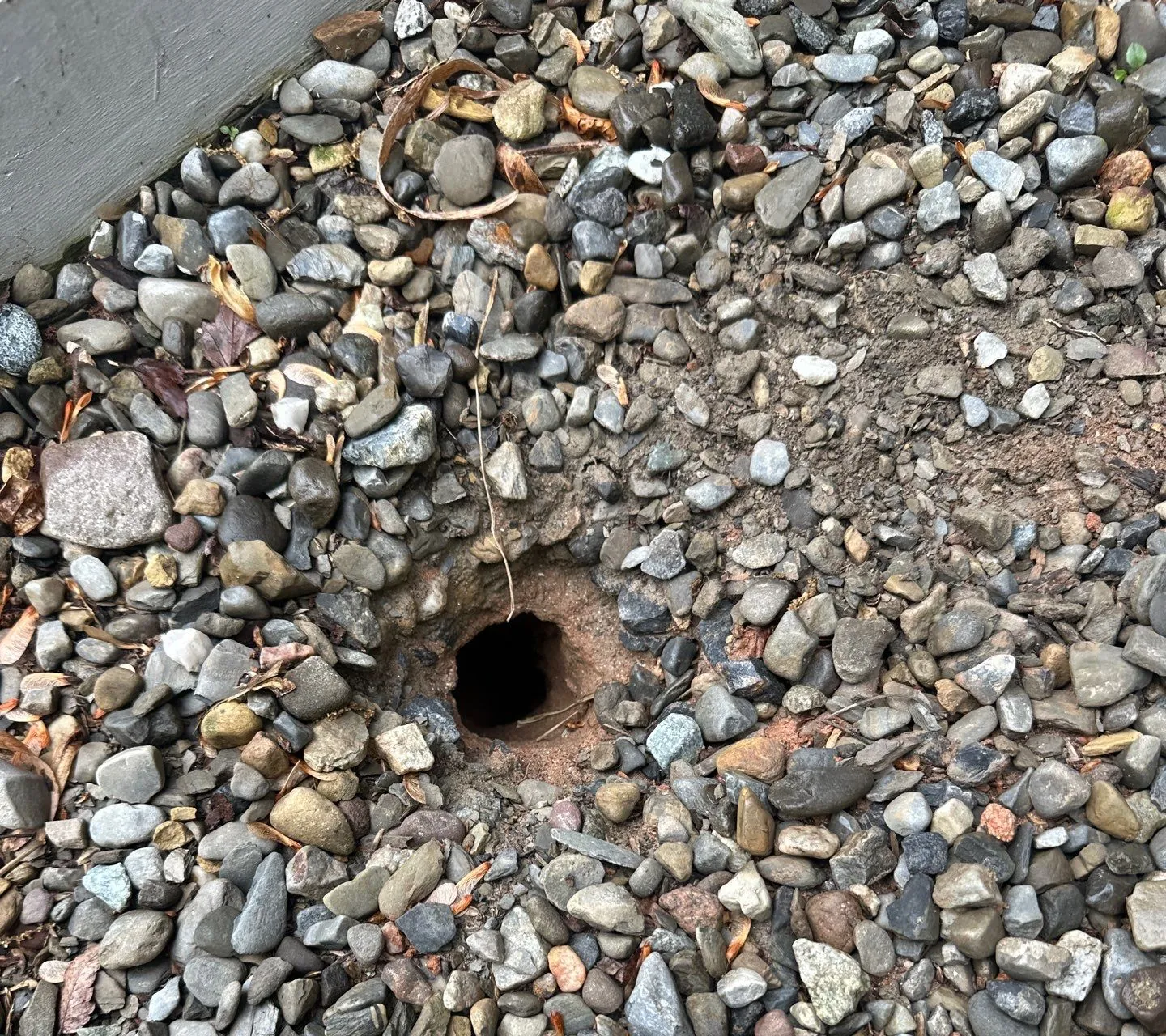
Chipmunks live in underground burrow systems up to 30 feet long and 3 feet deep. A burrow has a nest chamber, one or two food storage chambers, side pockets and escape tunnels. The entrance is about 2 inches wide with no dirt around it, because the chipmunk carries the soil away in its cheek pouches and scatters it.
In the wild, chipmunks live in woods, woodland edges and brushy areas. Suburban yards give them the same things: cover, food and protected places to dig. Foundations, patios, steps, retaining walls, stone walls, woodpiles and dense ground cover all hide a burrow entrance from hawks and cats, and bird feeders keep the pantry full.
A typical yard holds 2 to 4 chipmunks per acre, and up to 10 per acre where food and cover are plentiful. Each adult defends about 50 feet around its own burrow entrance.
Two litters a year, and a winter spent half-awake
Chipmunks don’t truly hibernate. They enter torpor in cold weather and stay mostly underground from late fall through winter, waking to eat from their food stores. Some come out on warm, sunny winter days, and most are active again by early March.
In Maryland, chipmunks mate twice a year, from February to April and from June to August. After a 31-day pregnancy, females give birth to 2 to 6 young underground. The young leave the burrow at about 6 weeks old and are on their own 2 to 4 weeks later.
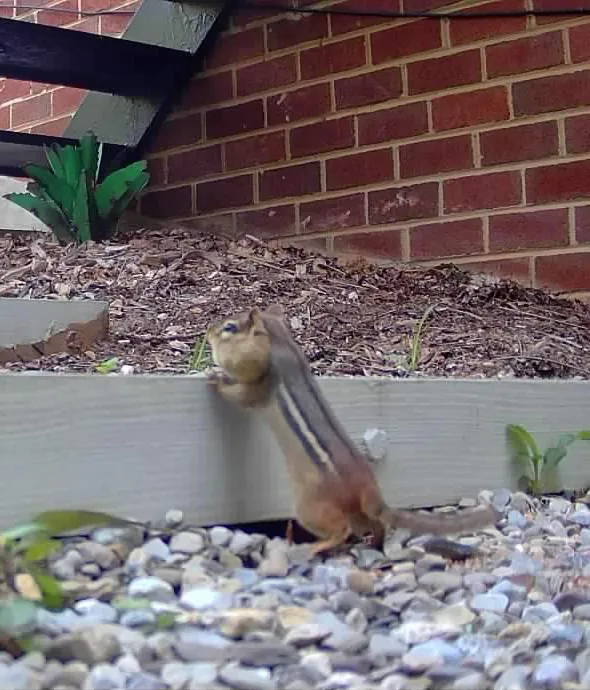
The Good Side of Chipmunks
In the woods, chipmunks are busy little gardeners. We don’t want them gone from Maryland. We just want them out from under your patio.
- They plant seeds. By carrying and storing seeds, chipmunks spread them across the forest floor and help many plants grow.
- They spread fungi. As they feed, chipmunks scatter the spores of mushrooms and other fungi.
- They eat some garden pests. Insects, worms and snails are all on the menu.
- Most of the damage is small. The exceptions are burrows under foundations, patios, steps and walls, and that’s where we come in.
The goal is balance: a few chipmunks at the edge of the woods, not a colony under your patio.
Signs You Have Chipmunks
Chipmunk problems are easy to miss until the patio starts to sink. Call us if you notice any of these:
- Round holes about 2 inches wide with no dirt pile around them
- Holes along the foundation, at the edges of patios and walkways, or under steps and stoops
- Bulbs dug up, seeds and seedlings gone, or flowers and fruit nibbled
- Pavers, steps or patio stones that are settling or shifting
- A small striped animal running with its tail straight up
- Bird seed disappearing faster than the birds could eat it
- Seed husks and nut shells piled on walls, steps or deck rails
- Chipmunks in the garage, shed or gutters
Not sure it’s chipmunks? Small holes can also be voles or rats, and large holes with a dirt mound are usually groundhogs.
Chipmunk Problems, Hazards and Damage, and How We Fix Each One
Most chipmunk damage is minor, but a few problems come up again and again. Here is what each one means for your property and exactly how our team handles it.
1. Tunnels under patios, walkways, steps and stoops
The hazard: A patio or stoop is a perfect roof for a chipmunk burrow. A main tunnel runs 20 to 30 feet, and as the soil is carried away, pavers and stones start to sink and shift. Concrete steps and stoops can settle over the hollow, and loose pavers become trip hazards.
How we fix it: We trap and remove the chipmunks working that area, then close the holes along the patio edge. Where the edge stays exposed, a buried barrier along the border keeps new ones from tunneling under. We’ll point out any settling so a hardscape contractor can reset the pavers once the chipmunks are gone.
2. Burrows behind retaining walls and stone walls
The hazard: Chipmunks dig into the gaps of stone walls and the backfill behind landscape and retaining walls. Losing soil behind a wall can lead to bulging, settling or loose blocks.
How we fix it: We remove the chipmunks living in the wall and close the openings. For dry-stacked stone walls, we recommend mortaring the gaps, which takes away the hiding places. We’ll show you which sections are most at risk.
3. Bulbs, seeds, seedlings and gardens
The hazard: Chipmunks dig up and eat tulip, crocus and other bulbs, and they take seeds, seedlings and new grass seed. They also nibble fruit, berries and flowers. In a yard with many chipmunks, a new planting can vanish in a few days.
How we fix it: For bulbs and seed beds, we recommend covering the bed with quarter-inch hardware cloth under a layer of soil, extending at least 1 foot past each edge. When the population is high, we pair that with a trapping program to bring the numbers down.
4. Chipmunks in garages, sheds, gutters and homes
The hazard: Chipmunks wander into garages and sheds through open doors and gaps, especially when bird seed, grass seed or pet food is stored there. They run through gutters and downspouts, and they’ll squeeze into gaps around a house the same way mice do. Once inside, they chew bags and make a mess.
How we fix it: We remove the chipmunk and close the gaps with rodent-proof materials. We install gutter guards and downspout covers where needed, and protect dryer and exhaust vents with guards made for them. Learn more about wildlife exclusion and our vent guards.
5. Bird feeders and pet food drawing chipmunks to the house
The hazard: Spilled bird seed and outdoor pet food are an endless food supply. Chipmunks fill their cheek pouches and carry it home, so the burrows end up right beside the feeder, often near your foundation or patio.
How we fix it: Usually this is a habitat fix: move feeders 15 to 30 feet from buildings, use feeders that catch spilled seed, and keep seed and pet food in sealed containers. When chipmunks are already damaging the property, we pair those changes with removal.
6. Health risks: ticks and bites
The hazard: Chipmunks are not a major direct disease threat, but they are one of the main hosts for the ticks that spread Lyme disease.
How we fix it: Reducing chipmunk numbers around the house, patio and play areas helps reduce tick hosts where your family spends time. Keep pets on vet-recommended tick prevention, check for ticks after yard work, and never handle a chipmunk with bare hands.
Seeing small holes by your foundation or patio? The sooner chipmunks are removed, the less soil they move. Book a Chipmunk Inspection or call 410-994-8881.
Why Every Chipmunk Job Starts With an Inspection
An inspection tells us how big the problem is, whether the burrows are threatening anything important, and what will keep chipmunks from moving back in.
During a chipmunk inspection, our technicians:
- Walk the foundation, patio edges, steps, walkways and walls to find every active hole.
- Check for settling pavers, hollow steps, loose wall stones and gaps at the base of the house.
- Estimate how many chipmunks are on the property, so we set the right number of traps.
- Confirm it’s chipmunks, not voles, rats or squirrels, which need different plans.
- Look for what’s drawing them in: bird feeders, stored seed and pet food, woodpiles, ground cover and stone walls.
- Check the garage, shed, gutters and downspouts for chipmunks getting inside.
- Photograph everything and give you a written plan with clear pricing for removal, exclusion and follow-up.
A wildlife inspection is $149, and the fee is credited toward your job if you move forward.
Chipmunk Control Methods: What Works and What Doesn’t
Professional wildlife control uses six families of methods. Here is how each one applies to chipmunks, and how we use them.
1. Habitat modification
Changing the property so it’s less attractive to chipmunks. Verdict: one of the most effective long-term steps for chipmunks.
- Don’t plant ground cover, shrubs or trees in a continuous line from the woods to your foundation. Chipmunks use it as a covered highway.
- Keep firewood, lumber and debris away from the house.
- Mortar the gaps in dry-stacked stone walls, or remove walls that keep filling with chipmunks.
- Move bird feeders 15 to 30 feet from buildings and use feeders that catch spilled seed.
- Store bird seed, grass seed and pet food in sealed, rodent-proof containers.
Our role: We point out every attractant during the inspection and tell you which changes matter most for your property.
2. Exclusion
Physically blocking chipmunks from buildings, beds and burrow sites. Verdict: works well for buildings, bulb beds and problem walls, but you can’t fence chipmunks out of a whole yard.
- We seal gaps into garages, sheds and homes with quarter-inch hardware cloth or other rodent-proof materials.
- We install gutter guards, downspout covers and vent guards where chipmunks are getting in.
- Bulb beds and seed beds can be covered with quarter-inch hardware cloth under the soil.
- Along a foundation, patio edge or wall that keeps getting dug, we can bury a barrier (trenching and skirting). It can get costly and is practical only in certain situations.
See our full home exclusions.
3. Repellents and deterrents
Products meant to make an area unpleasant to chipmunks. Verdict: limited. Taste repellents can protect bulbs and seeds for a while; nothing drives chipmunks out of a burrow.
- Frightening devices (ultrasonic, strobe, owl decoys): none of them are effective for chipmunks.
- Taste repellents with capsaicin, Bitrex or ammonium soaps can protect bulbs, seeds and foliage, but they need repeat applications, rarely give complete protection, and aren’t for plants people eat.
- Predator urine is sold as a barrier, but repellents in general are expensive and most haven’t been well tested.
- Mothballs: Don’t use them. Using them to repel animals is off-label, and the fumes are harmful to people and pets.
Our role: We’ll tell you honestly when a repellent is worth trying and when it’s a waste of money.
4. Population reduction: trapping and removal
Removing the chipmunks causing damage. Verdict: the most practical method for most homes, as long as it’s paired with habitat changes.
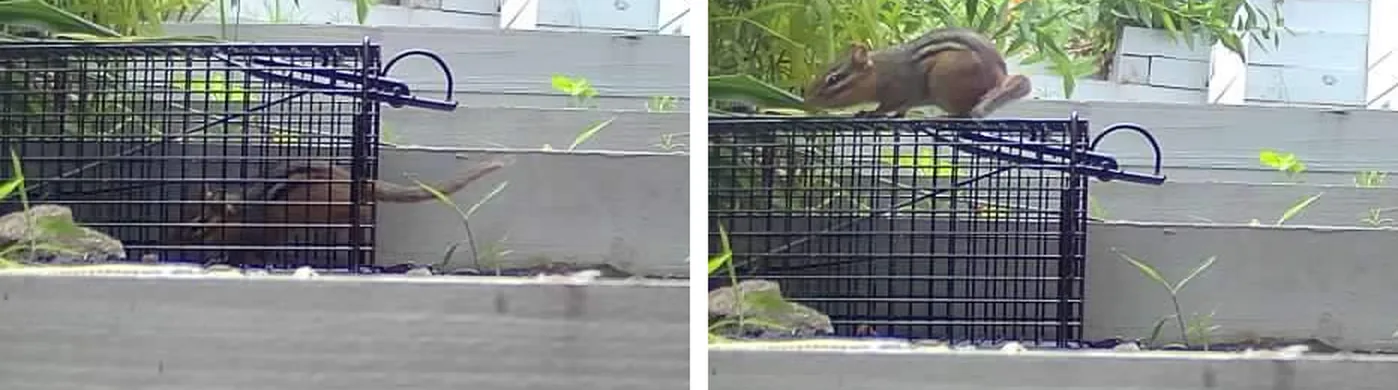
- We use traps sized for chipmunks, baited with peanut butter, nuts or sunflower seeds, and placed at active burrows and travel routes. We protect traps so birds and pets can’t reach them. Both live and lethal traps can be used.
- We check traps on a set schedule and remove captured animals promptly.
- Expect follow-up visits. New chipmunks move in from surrounding yards, and young are born twice a year.
- Maryland law: Chipmunks aren’t a game species in Maryland and have no hunting season. A homeowner needs a free landowner wildlife damage control permit to trap chipmunks that are damaging property. Our DNR permit covers the work our team does, so you don’t need your own permit when we handle the job.
- Maryland’s nuisance wildlife rules limit where a captured animal may be released. We follow them for every animal we capture.
5. Chemical control
Poisons and fumigants. Verdict: not a good option around homes. No toxic baits or fumigants are registered for chipmunks in Maryland. Rat and mouse baits put pets, birds of prey and other wildlife that eat poisoned animals at risk. Burrow fumigants must never be used near buildings, and the burrows chipmunks dig are usually right next to them.
6. Biological control
Using natural predators to control a population. Verdict: not practical. Hawks, foxes, snakes and other predators eat chipmunks, but they don’t keep up with a yard full of food and cover. Outdoor cats kill chipmunks, but they also kill songbirds, so we don’t recommend them as chipmunk control. There is no biological product for chipmunks.
The bottom line: the combination that works is inspection, trapping, sealing buildings and fixing the habitat, with barriers where chipmunks threaten a foundation, patio or wall. That’s what our chipmunk program delivers.
DIY Chipmunk Prevention: What You Can Do Today
You can’t trap legally without a permit, but you can make your yard far less inviting to chipmunks. Start here:
Around the house
- Keep firewood, lumber and debris away from the foundation, and stack firewood off the ground.
- Pull back dense ground cover and thick mulch from the foundation so holes are easy to see.
- Seal gaps into the garage, shed and house with quarter-inch hardware cloth, and keep garage doors closed.
- Add gutter guards and cover downspout openings.
- Fill empty burrows with soil and set a rock or paver over the spot. Only do this once you’re sure the chipmunk is gone.
Bird feeders, seed and pet food
- Move feeders 15 to 30 feet from the house and use trays that catch spilled seed.
- Clean up spilled seed regularly.
- Store bird seed, grass seed and pet food in metal or heavy plastic bins with tight lids.
- Don’t leave pet food outside.
Yard and garden
- Plant bulbs under a layer of quarter-inch hardware cloth that extends 1 foot past the bed on every side.
- Mortar or repair gaps in dry stone walls near the house.
- Protect new seed beds with hardware cloth or row cover until plants are established.
What not to do
- Don’t use poison or rat bait. It puts pets, hawks, owls and other wildlife at risk.
- Don’t use mothballs or ammonia in burrows.
- Don’t trap without a Maryland landowner permit, and don’t handle chipmunks with bare hands. They bite.
- Don’t flood burrows with a hose next to the foundation. It puts water where you least want it.
- Don’t feed chipmunks near your home.
Frequently Asked Questions About Chipmunks
Can chipmunks damage my foundation?
Typically not, but large numbers of chipmunks can undermine patios, stairs and retaining walls. A few chipmunks rarely cause structural problems, but a colony digging along the same wall for years can.
Why is there no dirt around the chipmunk holes?
Chipmunks carry the soil away in their cheek pouches and scatter it, which keeps the burrow hidden. A clean, 2-inch hole with no dirt pile is a classic chipmunk sign.
Do chipmunks hibernate?
Not fully. They spend late fall through winter mostly underground in a light torpor, waking to eat from their food stores. Some come out on warm winter days, and most are active again by early March.
How many chipmunks are in my yard?
Usually more than you think. A typical yard holds 2 to 4 per acre, and up to 10 where food and cover are plentiful.
Should I fill in chipmunk holes?
Yes, but only once the chipmunks are gone. Fill the hole with soil and set a rock or paver over it. Filling an active hole just sends the chipmunk to dig a new entrance nearby.
Is it legal to trap chipmunks myself in Maryland?
Maryland requires a free landowner wildlife damage control permit before a homeowner traps chipmunks that are damaging property. You also have to follow state rules on what happens to the animal afterward.
Do you relocate chipmunks?
Usually not. Relocated animals often die in unfamiliar territory, and moving them can spread disease. When an animal can’t be released, it is humanely euthanized as Maryland rules allow. That’s why our focus is sealing your home so very few animals are ever caught.
Do chipmunks carry disease?
They aren’t a major direct threat, but they’re one of the main hosts for the ticks that spread Lyme disease. Keep pets on tick prevention and check yourself for ticks after yard work.
Will repellents or mothballs get rid of chipmunks?
No. Taste repellents can protect bulbs and seeds for a while, but no product drives chipmunks out of a burrow. Mothballs are off-label for this use and harmful to people and pets.
Do you guarantee your work?
Yes. Every exclusion job comes with our one-year general warranty. Choose our full home exclusion package and you get our Full Home Exclusion warranty, which covers any wildlife or rodent getting into your home through any opening, renewable every year.
Get Chipmunks Out From Under Your Patio
Maryland Wildlife Solutions is a licensed and insured wildlife control company based in Gambrills. Our owner is an NWCOA Certified Master Instructor and the 2020 NWCOA Educator of the Year, and he trains wildlife professionals across the country. He serves on the NWCOA Training Committee and is a past Director at Large on the NWCOA Board of Directors. We’re licensed in Maryland, Virginia and Washington DC, and we’re a certified Maryland Small Business Enterprise (SBE). Our team holds NWCOA Certified Wildlife Control Professional and Exclusion Product Installation certifications. We trap chipmunks where they’re doing damage, seal them out of your buildings, and show you how to keep your yard from refilling. See our qualifications and certifications.
Call: 410-994-8881 | Email: info@mdwild.com
Serving homes and businesses across Greater Baltimore and Anne Arundel County, and throughout Maryland, Washington DC and Virginia. See our full service area, or our wildlife removal services for other animals.